
Home Conditions We Treat Weight Gain & Metabolic Health
Weight Gain & Metabolic Health
You’re eating well, you’re moving, and your body still isn’t responding the way it used to. That’s rarely a willpower problem. It’s often a metabolic one, and it’s worth understanding.
What is insulin resistance?
Insulin resistance is a condition in which your body doesn’t respond to insulin the way it should. Over time, it can raise blood sugar and lead to weight gain, and it often goes unnoticed until blood sugar is checked.[2][4]
At a glance
Who it often affects
Men and women from their late 30s on, often during hormonal shifts
What it can feel like
Weight that won't move, cravings, energy crashes, a softer middle
What we look at
Insulin, blood sugar, cholesterol, hormones and thyroid together
How care works
Telehealth, with a provider who stays with you
What are the signs of insulin resistance?
The most common signs are weight gain around the middle, energy crashes after meals, strong cravings and weight that won’t respond to effort. Many people have no symptoms at all until blood sugar is checked.
- Weight gain around the middle, even with the same habits
- Weight that won’t move despite diet and exercise
- Energy crashes or sleepiness after meals
- Strong cravings for sugar or carbs
- Feeling hungry soon after eating
- Losing muscle or strength
- Rising blood pressure or cholesterol
- Poor sleep or snoring
- Brain fog in the afternoon
- Clothes fitting differently even when the scale doesn’t change
Recognize a few of these? Take the 2-minute quiz.
What causes weight gain and insulin resistance in midlife?
It usually isn’t your metabolism “crashing.” A large study of daily energy use found that metabolism stays remarkably stable from about age 20 to 60.[1] What changes is everything around it.
Insulin resistance is one of the biggest drivers. When your muscle, fat and liver cells don’t respond well to insulin, blood sugar and weight can both climb.[4] More than 2 in 5 American adults have prediabetes, and it often goes undetected.[2]
Hormones shift where your body stores fat, in both men and women. Muscle mass and strength also decline with age, a process called sarcopenia, and less muscle means your body handles blood sugar less well.[3] Poor sleep, stress and thyroid changes can make all of this harder.
Is weight gain just part of getting older?
It’s common, but it isn’t inevitable. Many people are told to eat less and move more, when the real issue is insulin, hormones, muscle or sleep.
Your body changed. Your plan should too.
Standard care often waits until blood sugar crosses a diagnostic line. We look earlier and wider, so your plan addresses why your body is holding on to weight, not just the number on the scale.
How is insulin resistance diagnosed?
There’s no single test for insulin resistance. Your provider looks at several markers together, along with your symptoms and history.
| Marker | What it tells you | Why it matters here |
|---|---|---|
| Fasting insulin | How hard your body works to manage blood sugar | Can rise years before blood sugar does |
| Glucose and A1c | Your short- and long-term blood sugar | Flags prediabetes, which often has no symptoms |
| Lipid panel | Cholesterol and triglycerides | Tracks metabolic and heart health together |
| Thyroid markers | How your metabolism is regulated | An underactive thyroid can contribute to weight gain |
| Sex hormones | Testosterone, estrogen and related markers | Shifts in midlife change where your body stores fat |
| hs-CRP | Low-grade inflammation | Often runs higher with metabolic strain |
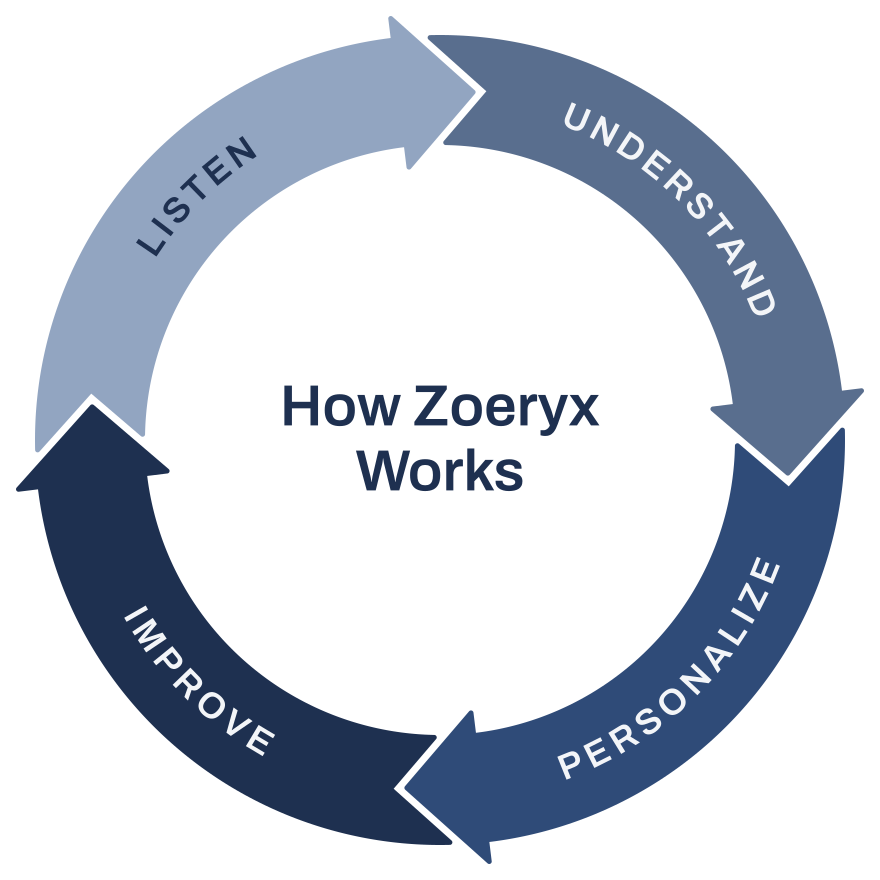
Every Zoeryx pathway starts with listening to how you feel and understanding your biology to build a personalized treatment plan to help improve how you feel. Learn about Era One
What are the treatment options for weight gain?
Medical weight loss treatment works best when it targets why your body is holding on to weight, and for many people that’s insulin resistance they don’t know they have. Most patients do best with a combination: medical weight loss with a GLP-1 medication such as semaglutide or tirzepatide, hormone or thyroid care when labs point to it, and protein and strength training that protects muscle. The goal is weight loss you can sustain while feeling energized and strong, not depleted.
| Approach | How it may help | Often a fit for |
|---|---|---|
| Semaglutide (weekly injection) | GLP-1 medication that helps regulate appetite, slow digestion and steady blood sugar | Insulin resistance, or weight that hasn’t responded to consistent effort |
| Tirzepatide (weekly injection) | A dual GLP-1 and GIP medication that curbs appetite and helps regulate blood sugar | People who have hit a plateau with other therapies, or who want broader metabolic, hormonal or longevity support |
| Hormone replacement therapy (HRT) | Steadying estrogen, progesterone and testosterone can ease the midlife shift that moves fat to the middle | Women in perimenopause or menopause whose weight changed with the transition |
| Testosterone replacement therapy (TRT) | Low testosterone makes belly fat easier to gain, and belly fat lowers testosterone further; treating low T can help break that cycle | Men whose labs show low testosterone |
| Thyroid support | Treating an underactive thyroid helps your metabolism work at its normal pace | When thyroid labs are out of range |
| Peptide therapy, such as tesamorelin | May support body composition alongside other care | People focused on reducing belly fat while protecting muscle |
| Protein and strength training | Protects muscle while you lose fat | Everyone, and especially anyone on a GLP-1 medication |
How Zoeryx brings it together
Our core path is medical weight loss built around your Era One labs: a GLP-1 medication when it fits, paired with a plan that protects muscle and steadies blood sugar. Hormone or thyroid care is added when your labs point to it. Protein, strength training and sleep are built in from the start, so you protect muscle as you lose fat.
Your labs are drawn first at a site near you, then your provider meets you by video, and treatment ships to your door.
Good to know
We aim for a steady, sustainable pace of weight loss, so you feel good along your weight loss journey and keep the muscle that supports your strength and metabolism.
When should you see a provider about weight gain?
See a provider if your weight is rising despite consistent effort, or if you have a family history of diabetes, high blood pressure or high cholesterol. Get care promptly for extreme thirst, frequent urination, blurred vision or unexplained weight loss, which can signal high blood sugar.
Does metabolism really slow down at 40?
Not much. A large study of more than 6,000 people found that metabolism stays fairly stable from about age 20 to 60, then slowly declines.[1] Midlife weight gain usually comes from changes in insulin, hormones, muscle, sleep and activity, which are things you can measure and address.
Is this just a GLP-1 program?
No. GLP-1 medications can be a helpful tool for some people, and your provider may recommend one when it fits. But medication works best inside a plan that also protects muscle, improves sleep and addresses hormones, so the changes last.
Frequently asked questions
Can weight and metabolic health be treated through telehealth?
Yes. Your care happens online with a licensed provider, by video. If medication is part of your plan, it’s shipped directly to your door, and your care team stays with you, adjusting your plan as you go.
Do you prescribe GLP-1 medications?
When your results, history and goals point to it, a GLP-1 medication may be part of your plan. Your provider decides whether it’s right for you and monitors how you respond. It’s one tool, not the whole plan.
Do you help with muscle and strength, not just weight?
Yes. Keeping and building muscle is central to metabolic health, especially as you age. Your plan looks at body composition, not just pounds.
Do I need labs before my first visit?
Usually. Most care starts with Era One, which includes a comprehensive health and hormone panel, so your provider sees the full picture before recommending anything. For some care, your provider may start with a consultation and order only the labs you need.
How is Zoeryx different from my primary care doctor?
Primary care is essential, and we don’t replace it. We go deeper on metabolic health: more time to listen, a wider panel of labs and a provider who adjusts your plan as you change. Many patients keep their primary care doctor and use Zoeryx alongside.
Is Zoeryx covered by insurance?
Zoeryx is a cash-pay practice and doesn’t bill insurance. That lets us spend the time your care deserves, look deeper than a standard visit allows and build a plan around you, not around coverage rules.
Your next era starts with your biology.
Personalized health care begins with understanding where you are today. We’ll help you connect the dots, build a plan around your goals, and track your progress over time.
Start with Era One.
Complete your health intake and book Era One, which includes your comprehensive lab panel and extended one-on-one provider consultation for one payment.
Get your labs drawn.
Visit a Quest Diagnostics location near you for your blood draw. Your results provide the foundation for a deeper look at your health and are available to you and your provider.
Meet your provider.
A one-on-one video visit to review your results, discuss your symptoms and goals, and build a personalized care plan around your health and priorities.
Start your plan.
Your prescribed therapies arrive discreetly at your door from licensed pharmacies, with clear instructions for getting started.
A plan that changes as you do.
Your biology keeps changing, so your care should evolve with it. We monitor your progress, check in on how you’re feeling, review your labs as appropriate, and adjust your plan as your needs change.
References
1. Pontzer H, et al. Daily energy expenditure through the human life course. Science. 2021;373(6556):808–812. doi.org/10.1126/science.abe5017
2. Centers for Disease Control and Prevention. Prediabetes: your chance to prevent type 2 diabetes. www.cdc.gov/diabetes/prevention-type-2/prediabetes-prevent-type-2.html
3. Cruz-Jentoft AJ, et al. Sarcopenia: revised European consensus on definition and diagnosis. Age Ageing. 2019;48(1):16–31. doi.org/10.1093/ageing/afy169
4. National Institute of Diabetes and Digestive and Kidney Diseases. Insulin resistance and prediabetes. www.niddk.nih.gov/health-information/diabetes/overview/what-is-diabetes/prediabetes-insulin-resistance