
Home Conditions We Treat Slow Recovery & Strength Plateau
Slow Recovery & Strength Plateau
Putting in the work but not getting the results? When progress stalls, recovery drags and nagging injuries linger, there’s often more going on than age, and it’s worth finding out what.
Why does progress stall and recovery slow down after 40?
Progress depends on hormones, sleep, nutrition, muscle and inflammation working together. As those shift with age and stress, you can train just as hard and still stall: strength stops climbing, soreness lasts longer and small injuries linger. Many of those shifts can be measured, and many can be addressed.
At a glance
Who it often affects
Active men and women from their late 30s on who still train: lifters, runners, golfers, competitors
What it can feel like
Stalled strength, longer soreness, lingering injuries, less drive to train
What we look at
Hormones, iron, vitamin D, inflammation and metabolic markers
How care works
Telehealth, with a provider who stays with you
Often connected to
Low Testosterone & Andropause Low Energy & Fatigue Weight Gain & Metabolic Health
What are the signs of slow recovery or a strength plateau?
The most common signs are strength that stops climbing despite consistent training, soreness that lasts longer, and small injuries that don’t fully heal. Sleep, energy and drive often slide with them.
- Putting in the work but not seeing results
- Strength or power that stalls or slips
- Soreness that lasts days longer than it used to
- Nagging injuries that linger
- Harder to build or keep muscle
- Workouts that leave you drained, not energized
- Poor or unrefreshing sleep
- Lower motivation to train
- More frequent colds when training hard
Recognize a few of these? Take the 2-minute quiz.
What causes slow recovery or a strength plateau?
Hormones are a big part of it. Falling testosterone in men and shifting estrogen in women make muscle harder to build and repair, so the same training produces less. Over time, muscle mass and strength decline, a condition called sarcopenia when it becomes significant, and it can start earlier in life than most people think.[1]
Sleep is when most repair happens. Adults need at least seven hours a night, and many active people get less.[2] Short sleep also lowers testosterone, even in healthy young men.[3]
Low iron, low vitamin D, under-fueling, ongoing inflammation and training hard without enough recovery can all keep you stuck. Because these overlap, we look at them together.
Is a plateau just part of getting older?
Some change with age is real. But a stall in strength or recovery often has causes, such as hormones, sleep, iron and inflammation, that can be measured and addressed.
Age changes how you recover. It doesn’t have to end how you compete.
Standard care often treats each injury on its own, or tells you to just train smarter. We look at the systems behind your recovery, so your plan supports how you train, not just what hurts.
How are slow recovery and strength plateaus evaluated?
With your training and health history, plus labs that show where recovery may be falling short.
| Marker | What it tells you | Why it matters here |
|---|---|---|
| Testosterone and estradiol | Your key sex hormones | Support muscle repair, strength and energy |
| IGF-1 | A growth-signaling marker | Adds context on repair and muscle |
| CBC and ferritin | Oxygen-carrying capacity and iron stores | Low iron is common in active people and drains endurance |
| Vitamin D | A nutrient for bone and muscle | Low levels are common and affect strength |
| hs-CRP | Low-grade inflammation | Can stay high with overtraining or poor recovery |
| Thyroid and metabolic markers | Metabolism and blood sugar | Affect energy, fueling and body composition |
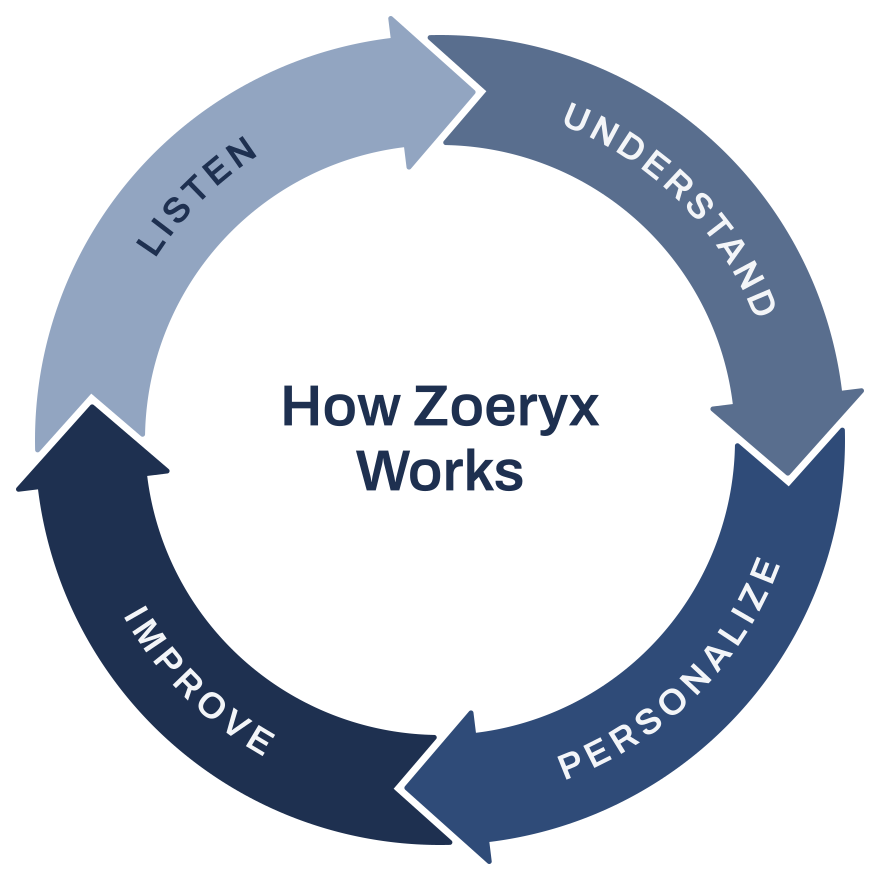
Every Zoeryx pathway starts with listening to how you feel and understanding your biology to build a personalized treatment plan to help improve how you feel. Learn about Era One
What are the treatment options for slow recovery or a strength plateau?
Treatment for slow recovery or a strength plateau aims to get your training working for you again, by fixing what’s holding back repair and progress. Options may include testosterone replacement therapy for men, hormone replacement therapy for women, peptide therapy and NAD+ to support recovery, correcting low iron or vitamin D, and the protein, training load and sleep habits that let you keep building at any age.
| Approach | How it may help | Often a fit for |
|---|---|---|
| Testosterone replacement therapy (TRT) | Supports muscle repair, strength and recovery when testosterone is low | Active men whose labs show low testosterone |
| Hormone replacement therapy (HRT) | Replaces the estrogen, progesterone and testosterone that help protect muscle and bone | Active women in perimenopause or menopause |
| Peptide Therapy, such as sermorelin | Supports growth-hormone signaling involved in recovery and body composition | Adults focused on recovery, sleep and body composition |
| Recovery Peptides, such as BPC-157 | Being studied for tissue repair; human evidence is still early | Nagging soft-tissue injuries, alongside rehab |
| NAD+ (injections or nasal spray) | May support cellular energy and recovery | Slow recovery and low energy after training |
| Iron and vitamin D repletion | Corrects deficiencies that drain endurance and strength | When labs show low levels |
How Zoeryx brings it together
Our core path starts with your Era One labs and training history, then corrects what’s holding your recovery and progress back, whether that’s hormones, iron or vitamin D. Your provider may add peptide therapy or NAD+ when they fit your goals. Protein, training load and sleep are part of the plan from day one, because that’s where recovery happens.
Your labs are drawn first at a site near you, then your provider meets you by video, and treatment ships to your door.
Good to know
If you compete at a high level in a tested or regulated sport, tell us up front so your provider can design a plan that’s right for you and meets your sport’s anti-doping rules.[4]
When should you see a provider about slow recovery or a strength plateau?
See a provider if soreness, weakness or an injury hasn’t improved after a few weeks, or if you’re losing strength without a clear reason. Get care in person promptly for a joint that’s swollen, hot or can’t bear weight, sudden severe pain, or dark urine with severe muscle pain after a hard workout.
Why has my progress stalled even though I’m training hard?
Usually because something underneath has changed, not your effort. Lower testosterone or shifting estrogen, short sleep, low iron or vitamin D, under-fueling and accumulated fatigue can all blunt how your body responds to training. Labs plus a look at your training and recovery show where to start.
Do you work with athletes in tested sports?
Yes, and tell us up front. Some therapies are banned under anti-doping rules, including the World Anti-Doping Agency’s Prohibited List.[4] Your provider asks about tested or sanctioned events at every consult and plans around them.
Why do injuries take longer to heal as I get older?
Tissue repair slows with age, and less muscle, shorter sleep, lower hormones and low iron or vitamin D can slow it further. Many of those factors can be measured, which gives your plan somewhere to start.
Frequently asked questions
Can recovery and performance be addressed through telehealth?
Yes. Your care happens online, and your consultation with a provider is by live video. If therapy is part of your plan, it’s shipped directly to your door, and your care team stays with you over time, adjusting your plan as you go.
Do you offer peptide therapy?
Some plans may include peptide therapy when your provider decides it’s appropriate. Any compounded medication is prepared by a licensed pharmacy and is not FDA-approved. Your provider explains what’s involved and what’s known about it before you decide.
Why am I losing muscle as I get older?
Muscle mass and strength decline with age, and when the loss becomes significant it’s called sarcopenia.[1] It often starts as a plateau: strength stops climbing even though you’re training. Lower testosterone or estrogen, short sleep, too little protein and not enough training stimulus can speed it up, and many of those can be measured and addressed. Acting early helps protect the muscle you have.
Do I need to be an athlete?
No. If staying strong, active and capable matters to you, whether that’s golf, the gym or keeping up with your kids, this is for you.
Do I need labs before my first visit?
Usually. Most care starts with Era One, which includes a comprehensive health and hormone panel, so your provider sees the full picture before recommending anything. For some care, your provider may start with a consultation and order only the labs you need.
How is Zoeryx different from my primary care doctor?
Primary care is essential, and we don’t replace it. We go deeper on recovery, strength and performance: more time to listen, a wider panel of labs and a provider who adjusts your plan as you change. Many patients keep their primary care doctor and use Zoeryx alongside.
Is Zoeryx covered by insurance?
Zoeryx is a cash-pay practice and doesn’t bill insurance. That lets us spend the time your care deserves, look deeper than a standard visit allows and build a plan around you, not around coverage rules.
Your next era starts with your biology.
Personalized health care begins with understanding where you are today. We’ll help you connect the dots, build a plan around your goals, and track your progress over time.
Start with Era One.
Complete your health intake and book Era One, which includes your comprehensive lab panel and extended one-on-one provider consultation for one payment.
Get your labs drawn.
Visit a Quest Diagnostics location near you for your blood draw. Your results provide the foundation for a deeper look at your health and are available to you and your provider.
Meet your provider.
A one-on-one video visit to review your results, discuss your symptoms and goals, and build a personalized care plan around your health and priorities.
Start your plan.
Your prescribed therapies arrive discreetly at your door from licensed pharmacies, with clear instructions for getting started.
A plan that changes as you do.
Your biology keeps changing, so your care should evolve with it. We monitor your progress, check in on how you’re feeling, review your labs as appropriate, and adjust your plan as your needs change.
References
1. Cruz-Jentoft AJ, et al. Sarcopenia: revised European consensus on definition and diagnosis. Age Ageing. 2019;48(1):16–31. doi.org/10.1093/ageing/afy169
2. Centers for Disease Control and Prevention. FastStats: sleep in adults. www.cdc.gov/sleep/data-research/facts-stats/adults-sleep-facts-and-stats.html
3. Leproult R, Van Cauter E. Effect of 1 week of sleep restriction on testosterone levels in young healthy men. JAMA. 2011;305(21):2173–2174. doi.org/10.1001/jama.2011.710
4. World Anti-Doping Agency. The Prohibited List. www.wada-ama.org/en/prohibited-list