
Home Conditions We Treat Low Energy & Fatigue
Low Energy & Fatigue
Coffee isn’t cutting it, and a full night’s sleep doesn’t fix it. Being tired all the time is common, but it isn’t something you just have to live with.
What causes constant fatigue?
Ongoing fatigue is a symptom, not a diagnosis. It’s often driven by something you can measure, such as hormone changes, an underactive thyroid, low iron or B12, blood sugar swings or poor sleep. Finding the cause is the first step to feeling like yourself again.
At a glance
Who it often affects
Busy men and women, especially from their late 30s on
What it can feel like
Exhaustion, afternoon crashes, low motivation, needing caffeine to function
What we look at
Hormones, thyroid, iron, B12, vitamin D and blood sugar together
How care works
Telehealth, with a provider who stays with you
What are the signs that fatigue is more than a busy schedule?
The biggest sign is tiredness that doesn’t improve with rest. If you’ve felt this way for weeks, or it’s affecting your work, workouts or mood, it’s worth looking into.
- Waking up tired after a full night’s sleep
- Afternoon energy crashes
- Relying on caffeine to get through the day
- Low motivation or drive
- Brain fog or trouble focusing
- Workouts that drain you instead of energizing you
- Feeling cold more often
- Shortness of breath with everyday activity
- Irritability or low mood
- Needing weekends just to recover
Recognize a few of these? Take the 2-minute quiz.
Why am I so tired all the time?
Fatigue usually has more than one cause. Common, measurable ones include an underactive thyroid, low iron or anemia, low vitamin D or B12, blood sugar problems and hormone changes in both men and women.[1][3][4]
Sleep is the foundation. Adults need at least seven hours a night, yet in every U.S. state roughly 3 in 10 adults or more fall short.[2] Sleep quality matters too: conditions like sleep apnea can leave you exhausted even after a full night in bed.[1]
Stress, overtraining, under-eating and some medications add to the load. Because the causes overlap, fixing one rarely solves everything, which is why we look at them together.
Is being tired all the time just normal at my age?
No. Many people are told fatigue comes with a busy life or getting older, and leave without answers. Ongoing exhaustion is your body telling you something.
Tired is common. Tired all the time isn’t a life sentence.
Standard care often runs a basic panel and, if nothing is flagged, stops there. We look at a wider set of markers and how they fit with your sleep, stress and symptoms.
How is the cause of fatigue diagnosed?
By combining your history with a panel that looks at several systems at once, because fatigue rarely has just one cause.
| Marker | What it tells you | Why it matters here |
|---|---|---|
| CBC | Red blood cells and hemoglobin | Anemia is a common, very fixable cause of fatigue |
| Ferritin | Your iron stores | Iron can run low before anemia shows up |
| Thyroid markers | How your metabolism is regulated | An underactive thyroid is a classic cause of tiredness |
| Vitamin B12 and vitamin D | Key nutrients for energy, nerves and muscle | Low levels are common and easy to miss |
| Glucose, A1c and insulin | How your body manages blood sugar | Blood sugar swings can cause energy crashes |
| Sex hormones | Testosterone, estrogen and progesterone | Hormone changes drain energy in men and women |
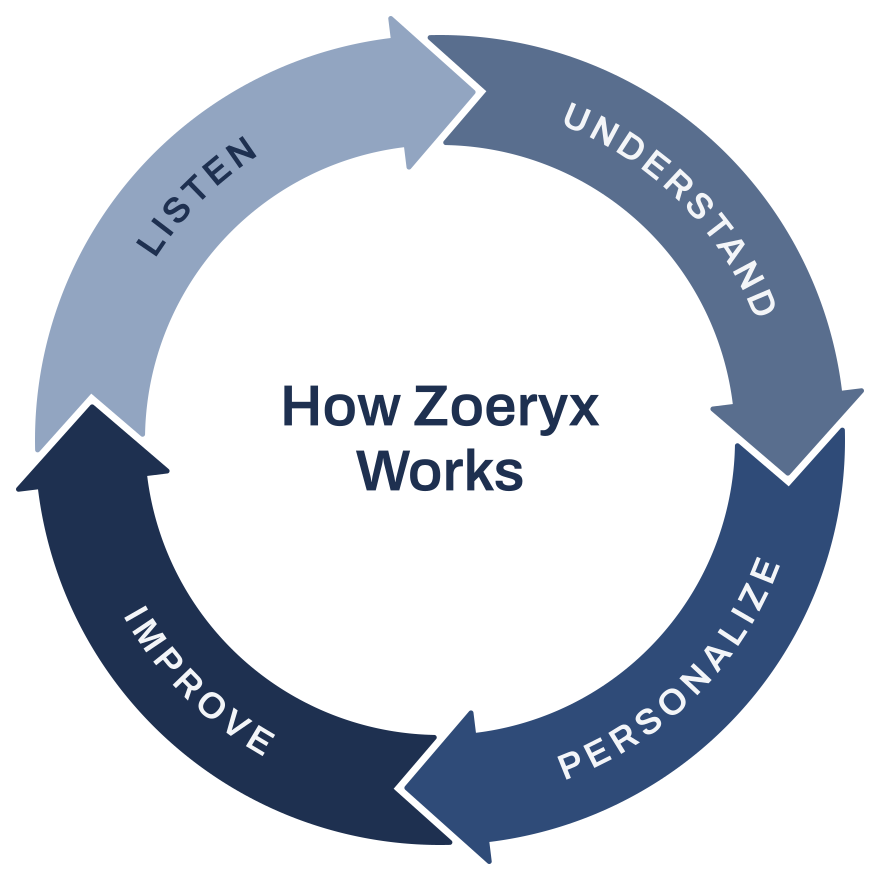
Every Zoeryx pathway starts with listening to how you feel and understanding your biology to build a personalized treatment plan to help improve how you feel. Learn about Era One
What are the treatment options for fatigue?
Low energy and fatigue treatment targets what your labs and history uncover that may be draining you, so the plan addresses the cause instead of masking the tiredness. The goal is energy you can count on, from the morning through the end of your day. Options may include correcting low iron, B12 or vitamin D, thyroid support, hormone replacement therapy for women, testosterone replacement therapy for men, NAD+ for cellular energy, and steadier blood sugar and sleep.
| Approach | How it may help | Often a fit for |
|---|---|---|
| Nutrient repletion (iron, B12 and vitamin D, by mouth or injection) | Corrects deficiencies that commonly cause tiredness | When labs show low levels |
| Thyroid support | Treating an underactive thyroid can ease the tiredness, coldness and brain fog it causes | Fatigue with feeling cold, weight gain or brain fog |
| Hormone replacement therapy (HRT) | Steadying the hormone shifts of perimenopause and menopause can improve sleep and daytime energy | Women whose fatigue started with hormonal changes |
| Testosterone replacement therapy (TRT) | Bringing low testosterone back into range may ease fatigue, low drive and low mood | Men whose fatigue comes with low drive, low mood or muscle loss |
| NAD+ (injections or nasal spray) | May support cellular energy production | Ongoing fatigue or slow recovery once other causes are addressed |
| GLP-1 medications | Steadier blood sugar can reduce afternoon crashes | Energy dips after meals, or signs of insulin resistance |
| Peptide therapy, such as sermorelin | May support deeper sleep and recovery, which shape your daytime energy | Fatigue tied to poor sleep or slow recovery |
How Zoeryx brings it together
Our core path starts with finding the cause in your Era One labs, then treating what we find, whether that’s iron, thyroid or hormones. When fatigue lingers after the basics are addressed, your provider may add NAD+. Because sleep and daily rhythm shape energy as much as any lab value, your provider looks at those too.
Your labs are drawn first at a site near you, then your provider meets you by video, and treatment ships to your door.
Good to know
Normal labs don’t end the search; they narrow it. Your provider looks at how your results fit together with your sleep, stress and symptoms.
When should you see a provider about fatigue?
See a provider if tiredness lasts more than a few weeks or affects your work, workouts or mood. Get care in person right away if fatigue comes with chest pain, shortness of breath at rest, fainting, unexplained weight loss, fever, or thoughts of harming yourself.
Is adrenal fatigue real?
Not as a medical diagnosis. The Endocrine Society says there’s no scientific proof that adrenal fatigue is a true medical condition, and no test reliably identifies it.[5] Your exhaustion is real, though, and it usually has causes that can be measured, such as thyroid, iron, sleep or hormones.
Can my iron be low even if my blood count is normal?
Yes. Iron deficiency starts with your iron stores running low, and hemoglobin can stay in the normal range during that stage.[3] That’s why we check ferritin, a measure of stored iron, along with a complete blood count.
Frequently asked questions
Can fatigue be treated through telehealth?
Yes. Your care happens online with a licensed provider, by video. If treatment is part of your plan, it’s shipped directly to your door, and your care team stays with you, adjusting your plan as you go.
What if my labs come back normal?
Then we keep looking. Normal results rule things out, which is useful, and your provider looks at how your markers fit together with your sleep, stress and symptoms, not just whether each one is flagged.
Can hormones cause fatigue in women, too?
Yes. Perimenopause, low iron from heavy periods and thyroid changes are common causes of fatigue in women, and they often overlap.
Do I need labs before my first visit?
Usually. Most care starts with Era One, which includes a comprehensive health and hormone panel, so your provider sees the full picture before recommending anything. For some care, your provider may start with a consultation and order only the labs you need.
How is Zoeryx different from my primary care doctor?
Primary care is essential, and we don’t replace it. We go deeper on the causes of fatigue: more time to listen, a wider panel of labs and a provider who adjusts your plan as you change. Many patients keep their primary care doctor and use Zoeryx alongside.
Is Zoeryx covered by insurance?
Zoeryx is a cash-pay practice and doesn’t bill insurance. That lets us spend the time your care deserves, look deeper than a standard visit allows and build a plan around you, not around coverage rules.
Your next era starts with your biology.
Personalized health care begins with understanding where you are today. We’ll help you connect the dots, build a plan around your goals, and track your progress over time.
Start with Era One.
Complete your health intake and book Era One, which includes your comprehensive lab panel and extended one-on-one provider consultation for one payment.
Get your labs drawn.
Visit a Quest Diagnostics location near you for your blood draw. Your results provide the foundation for a deeper look at your health and are available to you and your provider.
Meet your provider.
A one-on-one video visit to review your results, discuss your symptoms and goals, and build a personalized care plan around your health and priorities.
Start your plan.
Your prescribed therapies arrive discreetly at your door from licensed pharmacies, with clear instructions for getting started.
A plan that changes as you do.
Your biology keeps changing, so your care should evolve with it. We monitor your progress, check in on how you’re feeling, review your labs as appropriate, and adjust your plan as your needs change.
References
1. Cleveland Clinic. Fatigue: causes and treatment. my.clevelandclinic.org/health/symptoms/21206-fatigue
2. Centers for Disease Control and Prevention. FastStats: sleep in adults. www.cdc.gov/sleep/data-research/facts-stats/adults-sleep-facts-and-stats.html
3. NIH Office of Dietary Supplements. Iron: fact sheet for health professionals. ods.od.nih.gov/factsheets/Iron-HealthProfessional/
4. NIH Office of Dietary Supplements. Vitamin B12: fact sheet for health professionals. ods.od.nih.gov/factsheets/VitaminB12-HealthProfessional/
5. Endocrine Society. Adrenal fatigue. www.endocrine.org/patient-engagement/endocrine-library/adrenal-fatigue