
Home Conditions We Treat Sleep Problems & Insomnia
Sleep Problems & Insomnia
Lying awake at 3 a.m., waking up drenched, or sleeping eight hours and still feeling wrecked. Sleep problems in midlife often have a cause you can find, and they affect everything else.
What is insomnia?
Insomnia means trouble falling asleep, staying asleep or getting good-quality sleep, and it becomes chronic when it happens three or more nights a week for more than three months.[1] Roughly 1 in 3 adults has insomnia symptoms.[2] In midlife, hormone changes, stress, blood sugar swings and sleep apnea are common drivers.
At a glance
Who it often affects
Men and women, especially in midlife and during hormone changes
What it can feel like
Trouble falling or staying asleep, early waking, night sweats, daytime exhaustion
What we look at
Hormones, thyroid, blood sugar, iron and weight, plus your sleep history
How care works
Private telehealth, with a provider who stays with you
What are the signs of a sleep problem?
The most common signs are trouble falling asleep, waking in the night and not getting back to sleep, and waking up tired after a full night in bed.
- Trouble falling asleep
- Waking at 2 or 3 a.m. and not getting back to sleep
- Night sweats or hot flashes that wake you
- Waking up unrefreshed
- Snoring or gasping that a partner notices
- Daytime sleepiness or fatigue
- Brain fog or irritability
- Relying on alcohol or sleep aids to fall asleep
- Restless, uncomfortable legs at night
Recognize a few of these? Take the 2-minute quiz.
What causes sleep problems in midlife?
Hormones play a bigger role than most people realize. Menopause can affect sleep,[2] and hot flashes and night sweats can disrupt it for years: in one large study, they lasted a median of more than seven years.[4]
In men, short sleep and low testosterone feed each other. A single week of five-hour nights lowered daytime testosterone in healthy young men by 10 to 15 percent.[5] Stress, anxiety and alcohol can also make sleep harder.[2]
Growth hormone matters for everyone. Your body releases most of it during deep sleep, and the two decline together: in a study of healthy men, deep sleep fell from about 19 percent of the night in early adulthood to under 4 percent by midlife, while growth hormone output dropped in step.[7] Less deep sleep is one reason sleep can feel lighter and less restoring with age.
Is poor sleep just part of getting older?
Sleep does change with age, but lying awake for hours or waking exhausted isn’t something you have to accept. Chronic insomnia raises the risk of high blood pressure, heart disease and diabetes,[1] so it’s worth treating.
Sleep isn’t a luxury. It’s where everything else recovers.
Standard advice often stops at sleep habits or a sleeping pill. We look for what’s waking you, from hormones to blood sugar to breathing, and treat that.
How is the cause of insomnia diagnosed?
Mainly from your sleep history: when you wake, what wakes you and how you feel during the day. Labs help find hormone and metabolic causes, and a sleep study is needed when sleep apnea is suspected.
| Marker | What it tells you | Why it matters here |
|---|---|---|
| Sex hormones | Estradiol, progesterone and testosterone | Shifts can trigger night sweats and early waking |
| Thyroid markers | How your metabolism is regulated | An overactive or underactive thyroid can disrupt sleep |
| Glucose, A1c and insulin | How your body manages blood sugar | Blood sugar swings can wake you in the night |
| Cortisol | Your main stress hormone | Running high in the evening can make it harder to fall and stay asleep |
| IGF-1 | A marker of growth hormone activity | Gives context for lighter, less restorative sleep |
| Ferritin | Your iron stores | Low iron is linked to restless legs at night |
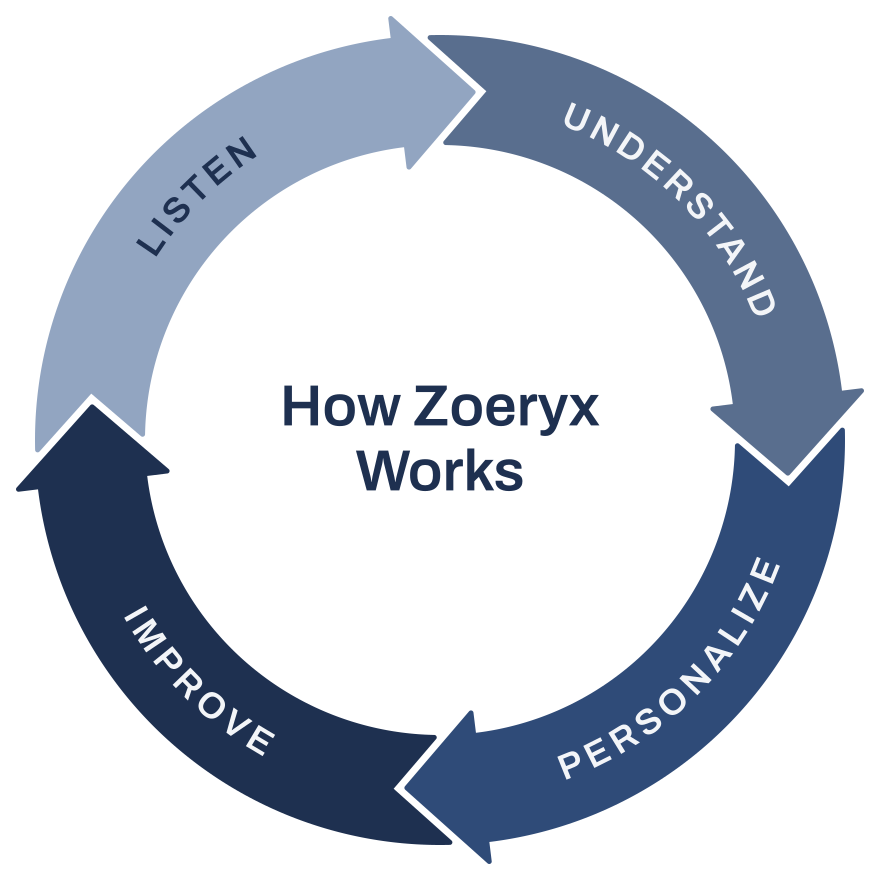
Every Zoeryx pathway starts with listening to how you feel and understanding your biology to build a personalized treatment plan to help improve how you feel. Learn about Era One
What are the treatment options for insomnia and sleep problems?
Insomnia treatment aims to give you nights that actually restore you, by fixing what’s keeping you up instead of just sedating it. Options may include hormone replacement therapy to calm the night sweats that wake you, testosterone replacement therapy for men caught in the cycle of low testosterone and poor sleep, peptide therapy that supports the deep sleep that fades with age, tirzepatide when excess weight is straining your breathing at night, and treating thyroid or iron problems your labs uncover.
| Approach | How it may help | Often a fit for |
|---|---|---|
| Hormone replacement therapy (HRT) | Steadying estrogen and progesterone can ease the night sweats and hot flashes that wake you | Women in perimenopause or menopause |
| Testosterone replacement therapy (TRT) | Low testosterone and poor sleep feed each other; treating low T helps break that cycle so sleep can recover | Men whose labs show low testosterone, once sleep apnea is ruled out |
| Peptide therapy, such as sermorelin or CJC-1295/ipamorelin | Supports your body’s own growth hormone pulse during sleep, which may help sleep feel deeper and more restorative | Adults whose sleep feels lighter and less restoring with age |
| Tirzepatide | Losing excess weight can ease sleep apnea and help sleep feel more restful; Zepbound, the brand-name form of tirzepatide, is FDA-approved for moderate to severe sleep apnea in adults with obesity[3] | Adults with excess weight, including those diagnosed with sleep apnea |
| Thyroid support | Treating a thyroid problem can steady sleep that’s been disrupted by it | When thyroid labs are out of range |
| Iron repletion | Correcting low iron can ease the restless legs that disrupt sleep | When ferritin is low |
How Zoeryx brings it together
Our core path starts with your sleep history and Era One labs, then treats what’s keeping you from restful sleep: HRT to calm the night sweats that wake you, TRT to break the cycle of low testosterone and poor sleep, peptide therapy to support the deeper sleep that fades with age, tirzepatide when weight is straining your breathing at night, and thyroid or iron care when labs point to it. The goal is nights that restore you, so you wake with the energy, focus and mood to show up for your day.
Your labs are drawn first at a site near you, then your provider meets you by video, and treatment ships to your door.
Good to know
Loud snoring, gasping or waking exhausted after a full night can be signs of sleep apnea, and untreated sleep apnea matters before starting testosterone therapy.[6] Your provider asks about these signs at your visit and factors them into your plan.
When should you see a provider about insomnia?
See a provider if poor sleep happens three or more nights a week, lasts more than a few weeks, or leaves you exhausted during the day. Get care in person promptly if you’ve nodded off while driving, a partner notices you stop breathing in your sleep, or you have thoughts of harming yourself.
Can hormones cause insomnia?
Yes. Menopause can affect sleep,[2] and hot flashes and night sweats can wake women for years.[4] In men, low testosterone and short sleep tend to feed each other.[5] Treating the hormone side is often what finally changes the nights.
Should I just take a sleeping pill?
Sleep medications can help in the short term, but they don’t fix what’s keeping you up. Finding and treating the cause, such as night sweats, low testosterone, blood sugar swings or excess weight, often matters more.
Frequently asked questions
Can insomnia be treated through telehealth?
Yes. Your care happens online with a licensed provider, by video. If treatment is part of your plan, it ships to your door in private packaging.
Do you test for sleep apnea?
We don’t run sleep studies, but your provider asks about the signs, such as loud snoring, gasping or daytime sleepiness. If they point to sleep apnea, your provider will recommend a sleep study through your primary care doctor or a local sleep center and factor the results into your plan.
Can poor sleep cause brain fog or weight gain?
It can contribute to both. Insomnia affects memory and concentration,[1] and short sleep makes appetite and blood sugar harder to manage.
Do I need labs before my first visit?
Usually. Most care starts with Era One, which includes a comprehensive health and hormone panel, so your provider sees the full picture before recommending anything. For some care, your provider may start with a consultation and order only the labs you need.
How is Zoeryx different from my primary care doctor?
Primary care is essential, and we don’t replace it. We go deeper on your sleep: more time to listen, a wider panel of labs and a provider who adjusts your plan as you change. Many patients keep their primary care doctor and use Zoeryx alongside.
Is Zoeryx covered by insurance?
Zoeryx is a cash-pay practice and doesn’t bill insurance. That lets us spend the time your care deserves, look deeper than a standard visit allows and build a plan around you, not around coverage rules.
Your next era starts with your biology.
Personalized health care begins with understanding where you are today. We’ll help you connect the dots, build a plan around your goals, and track your progress over time.
Start with Era One.
Complete your health intake and book Era One, which includes your comprehensive lab panel and extended one-on-one provider consultation for one payment.
Get your labs drawn.
Visit a Quest Diagnostics location near you for your blood draw. Your results provide the foundation for a deeper look at your health and are available to you and your provider.
Meet your provider.
A one-on-one video visit to review your results, discuss your symptoms and goals, and build a personalized care plan around your health and priorities.
Start your plan.
Your prescribed therapies arrive discreetly at your door from licensed pharmacies, with clear instructions for getting started.
A plan that changes as you do.
Your biology keeps changing, so your care should evolve with it. We monitor your progress, check in on how you’re feeling, review your labs as appropriate, and adjust your plan as your needs change.
References
1. National Heart, Lung, and Blood Institute. What is insomnia? www.nhlbi.nih.gov/health/insomnia
2. Cleveland Clinic. Insomnia: what it is, causes, symptoms and treatment. my.clevelandclinic.org/health/diseases/12119-insomnia
3. U.S. Food and Drug Administration. FDA approves first medication for obstructive sleep apnea. December 20, 2024. www.fda.gov/news-events/press-announcements/fda-approves-first-medication-obstructive-sleep-apnea
4. Avis NE, et al. Duration of menopausal vasomotor symptoms over the menopause transition. JAMA Intern Med. 2015;175(4):531–539. doi.org/10.1001/jamainternmed.2014.8063
5. Leproult R, Van Cauter E. Effect of 1 week of sleep restriction on testosterone levels in young healthy men. JAMA. 2011;305(21):2173–2174. doi.org/10.1001/jama.2011.710
6. Bhasin S, et al. Testosterone therapy in men with hypogonadism: an Endocrine Society clinical practice guideline. J Clin Endocrinol Metab. 2018;103(5):1715–1744. doi.org/10.1210/jc.2018-00229
7. Van Cauter E, Leproult R, Plat L. Age-related changes in slow wave sleep and REM sleep and relationship with growth hormone and cortisol levels in healthy men. JAMA. 2000;284(7):861–868. doi.org/10.1001/jama.284.7.861