
Home Conditions We Treat Thyroid Health & Hypothyroidism
Thyroid Health & Hypothyroidism
Tired, cold, foggy, gaining weight for no clear reason. Thyroid changes are common, often missed, and treatable once they’re found.
What is hypothyroidism?
Hypothyroidism means your thyroid isn’t making enough of the hormones that run your metabolism. It’s common: nearly 5 in 100 Americans have it, and women are much more likely than men to develop it.[2] Up to 60 percent of people with thyroid disease don’t know they have it.[1]
At a glance
Who it often affects
Women far more than men, and more often with age
What it can feel like
Fatigue, feeling cold, weight gain, brain fog, dry skin, low mood
What we look at
TSH, free T4, free T3, thyroid antibodies and related markers
How care works
Telehealth, with a provider who manages your thyroid care over time
What are the signs of an underactive thyroid?
The most common signs are fatigue, feeling cold, weight gain and brain fog. Symptoms often come on slowly, which is why they’re easy to blame on age or stress.
- Fatigue or sluggishness
- Feeling cold when others don’t
- Weight gain without a clear reason
- Brain fog or slower thinking
- Dry skin or brittle nails
- Thinning hair
- Constipation
- Low mood
- Heavier or irregular periods
- Muscle aches or stiffness
Recognize a few of these? Take the 2-minute quiz.
What causes hypothyroidism?
In the U.S., the most common cause is Hashimoto’s disease, an autoimmune condition in which the immune system slowly damages the thyroid.[2]
Thyroid problems are common and often missed. More than 12 percent of Americans will develop a thyroid condition in their lifetime, and women are five to eight times more likely than men to have thyroid problems.[1]
Other causes include thyroid surgery or treatment, some medications and changes after pregnancy. Because thyroid symptoms overlap with perimenopause, low testosterone and low iron, we look at them together.
My labs were normal. Why do I still feel this way?
TSH is a useful first screen, but it isn’t the whole picture. Many people are told their thyroid is fine based on that one number.
A normal result and feeling normal aren’t always the same thing.
We look at free T4, free T3 and thyroid antibodies alongside TSH, then connect the results to how you feel. If your thyroid isn’t the cause, that’s useful too, because it points us toward what is.
How is hypothyroidism diagnosed?
With blood tests that measure TSH and your thyroid hormones, T4 and T3.[4] A full thyroid picture takes more than TSH alone. These are the markers we look at.
| Marker | What it tells you | Why it matters here |
|---|---|---|
| TSH | The brain’s signal to your thyroid | The first screen, but not the whole story |
| Free T4 | The main hormone your thyroid makes | Shows how much your thyroid is producing |
| Free T3 | The active form your cells use | Shows how well your body converts and uses thyroid hormone |
| TPO antibodies | Signs of autoimmune activity | Can point to Hashimoto’s, even before levels change |
| Lipid panel | Cholesterol and triglycerides | An underactive thyroid can raise cholesterol |
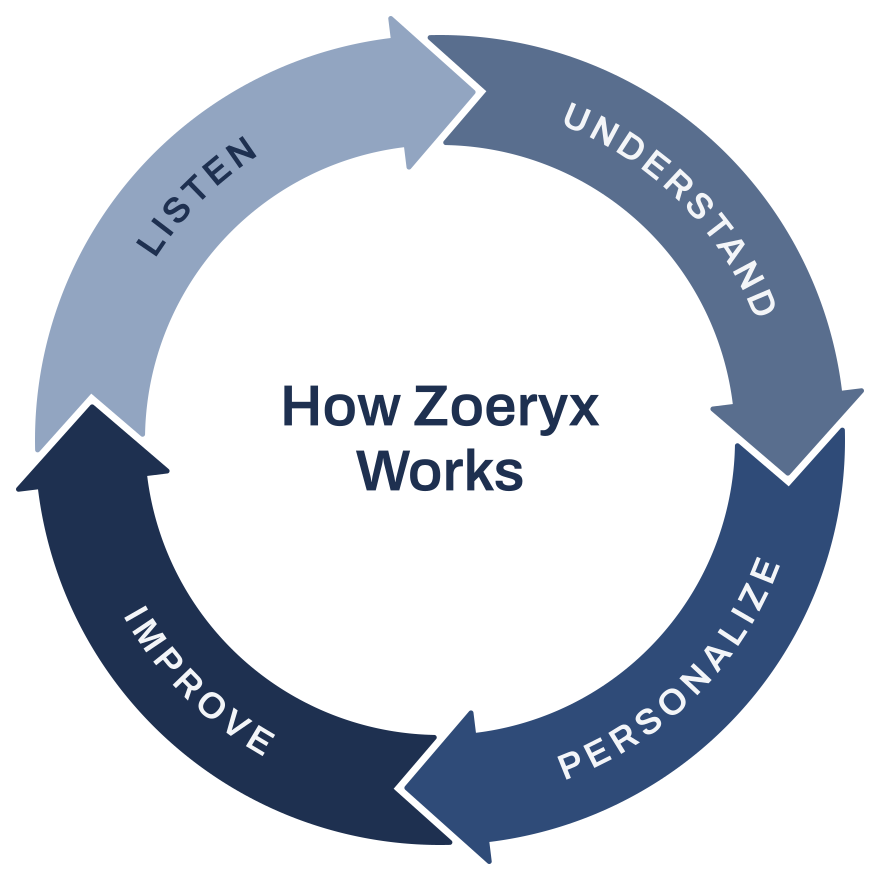
Every Zoeryx pathway starts with listening to how you feel and understanding your biology to build a personalized treatment plan to help improve how you feel. Learn about Era One
What are the treatment options for hypothyroidism?
Hypothyroidism treatment replaces the thyroid hormone your body isn’t making enough of, so the tiredness, coldness and fog it causes can ease. Your provider uses synthetic or natural thyroid medication, adjusted to your labs and how you feel,[2][3] and looks at the hormones and nutrients that overlap with thyroid symptoms.
| Approach | How it may help | Often a fit for |
|---|---|---|
| Synthetic Thyroid Hormone | Replaces the thyroid hormone your body isn’t making. Treatment usually starts with T4, and T3 is considered for some who still have symptoms on T4 alone | Most people with hypothyroidism |
| Natural Desiccated Thyroid | A natural source of thyroid hormone that contains both T4 and T3 | People who prefer a natural option, or who haven’t responded well to synthetic hormone, when it fits their labs and history |
| [Hormone Replacement Therapy (HRT) or Testosterone Replacement Therapy (TRT)](/services/hormone-replacement-therapy/, /services/testosterone-replacement-therapy/) | Treating overlapping hormone changes can ease fatigue, weight and mood symptoms that thyroid treatment alone may not resolve | Women in perimenopause or menopause, and men with low testosterone |
| Nutrient repletion (iron, vitamin D, B12) | Corrects deficiencies that can add to fatigue | When labs show low levels |
How Zoeryx brings it together
Our core path is thyroid hormone replacement, synthetic or natural, adjusted to your labs and how you feel, with your provider managing your care over time, including tracking thyroid antibodies if you have Hashimoto’s. Because thyroid symptoms overlap with hormones and nutrients, your provider looks at all three together.
Your labs are drawn first at a site near you, then your provider meets you by video, and treatment ships to your door.
Good to know
Thyroid medication takes several weeks to show in your labs, so your provider adjusts your plan step by step.[2]
When should you see a provider about your thyroid?
See a provider if you have ongoing fatigue, feel cold when others don’t, notice weight changes, or have a family history of thyroid disease. Get care in person promptly for a lump or swelling in your neck, trouble swallowing or breathing, or a racing heart.
What is Hashimoto’s disease?
Hashimoto’s is an autoimmune condition in which your immune system slowly damages your thyroid. It’s the most common cause of hypothyroidism in the U.S.[2] A thyroid antibody test can show it, sometimes before your thyroid levels change.
Is my thyroid connected to my other hormones?
Yes. Thyroid health affects energy, weight, mood, periods and libido, and its symptoms overlap with perimenopause and low testosterone. Looking at them together helps your provider find the real driver.
Frequently asked questions
Can hypothyroidism be treated through telehealth?
Yes. Your care happens online with a licensed provider, by video. If medication is part of your plan, it’s shipped directly to your door, and your provider manages your thyroid care over time.
Do you treat hypothyroidism?
Yes. When your labs and symptoms point to an underactive thyroid, your provider builds and manages a treatment plan with you and adjusts it as your body responds.[3]
Can you take over my current thyroid care?
Often, yes. Share your current treatment and recent labs, and your provider will review whether your plan fits how you feel and what your results show.
Do I need labs before my first visit?
Yes. Hormone care starts with Era One, which includes a comprehensive health and hormone panel, so your provider sees the full picture before recommending anything.
How is Zoeryx different from my primary care doctor?
Primary care is essential, and we don’t replace it. We go deeper on your thyroid: more time to listen, a wider panel of labs and a provider who adjusts your plan as you change. Many patients keep their primary care doctor and use Zoeryx alongside.
Is Zoeryx covered by insurance?
Zoeryx is a cash-pay practice and doesn’t bill insurance. That lets us spend the time your care deserves, look deeper than a standard visit allows and build a plan around you, not around coverage rules.
Your next era starts with your biology.
Personalized health care begins with understanding where you are today. We’ll help you connect the dots, build a plan around your goals, and track your progress over time.
Start with Era One.
Complete your health intake and book Era One, which includes your comprehensive lab panel and extended one-on-one provider consultation for one payment.
Get your labs drawn.
Visit a Quest Diagnostics location near you for your blood draw. Your results provide the foundation for a deeper look at your health and are available to you and your provider.
Meet your provider.
A one-on-one video visit to review your results, discuss your symptoms and goals, and build a personalized care plan around your health and priorities.
Start your plan.
Your prescribed therapies arrive discreetly at your door from licensed pharmacies, with clear instructions for getting started.
A plan that changes as you do.
Your biology keeps changing, so your care should evolve with it. We monitor your progress, check in on how you’re feeling, review your labs as appropriate, and adjust your plan as your needs change.
References
1. American Thyroid Association. General information / press room. www.thyroid.org/media-main/press-room/
2. National Institute of Diabetes and Digestive and Kidney Diseases. Hypothyroidism (underactive thyroid). www.niddk.nih.gov/health-information/endocrine-diseases/hypothyroidism
3. Jonklaas J, et al. Guidelines for the treatment of hypothyroidism: prepared by the American Thyroid Association Task Force on Thyroid Hormone Replacement. Thyroid. 2014;24(12):1670–1751. doi.org/10.1089/thy.2014.0028
4. Cleveland Clinic. Hypothyroidism (underactive thyroid): symptoms and treatment. my.clevelandclinic.org/health/diseases/12120-hypothyroidism